
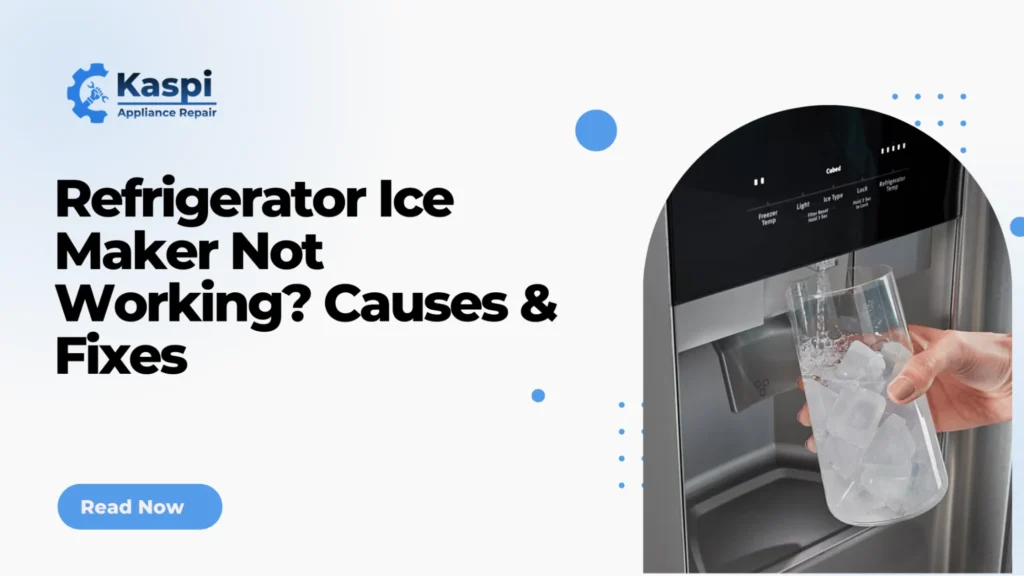
You reach into the freezer for some ice, grab your glass, and find the ice bin empty. Annoying, right? If your refrigerator ice maker is not working, don’t start guessing or replacing parts just yet. A refrigerator not making ice can be caused by something as simple as a water supply issue, warm freezer, clogged filter, or frozen fill tube.
Below, we’ll help you find why your ice maker is not making ice, what you can check yourself, and when it may be time for a repair.
Why Is My Refrigerator Ice Maker Not Working?
Your refrigerator ice maker may not be working because the ice maker is turned off, the freezer is too warm, water is not reaching the ice tray, the water filter is clogged or the fill tube is frozen. A faulty water inlet valve or ice maker assembly can also stop ice production.
Start with the simple things first. Make sure the ice maker is on, check that the freezer is set near 0°F (-18°C) and confirm the refrigerators water supply valve is open. If your refrigerator is still not making ice, the exact symptoms such as an empty ice tray, frozen cubes that won’t drop or no water entering the ice maker can help narrow down the problem.
Refrigerator Ice Maker Not Working? Check These 5 Things First
If your ice maker stopped making ice, check the ice maker switch or arm, freezer temperature, water supply, water filter, and ice bin first. These five quick checks can often point you to the problem before you reset the refrigerator, replace a part or schedule an ice maker repair.
1. Make Sure the Ice Maker Is Actually On
It sounds simple, but the ice maker can get switched off while loading food or cleaning the freezer. Some refrigerators use an ON/OFF switch or control panel setting, while others have a shutoff arm.
Look at the ice maker arm and make sure it moves freely. If the ice maker arm is stuck in the raised position, the refrigerator may think the ice bin is full and stop making ice.
2. Check the Freezer Temperature
Put a freezer thermometer inside and check the actual temperature instead of guessing by how cold the food feels. Your freezer should generally be set around 0°F (-18°C) for normal ice production.
If the freezer is running too warm, give it time to cool after adjusting the setting. Also check for food blocking the air vents, since poor airflow can slow or stop the ice-making cycle.
3. Follow the Water Line to the Refrigerator
Pull the refrigerator forward carefully and look at the water supply line behind it. Make sure the shutoff valve is fully open and the line isn’t bent, pinched, or crushed against the wall.
A frozen water line or restricted supply can leave the ice tray dry. If you recently moved the refrigerator, this is one of the first places to look.
4. Check the Refrigerator Water Filter
A clogged water filter can reduce water flow enough to slow down or stop ice production. Check when the filter was last changed and make sure it is seated correctly in the filter housing.
If the problem started right after a filter change, remove and reinstall the filter according to your refrigerator’s instructions. The wrong filter or a filter that isn’t locked into place can also affect water flow.
5. Look Inside the Ice Bin and Dispenser
Remove the ice bin and check for large frozen clumps, loose cubes stuck around moving parts or ice blocking the chute. Clear only ice that comes out easily, don’t force the mechanism with a knife or sharp tool.
If the ice maker is producing cubes but the refrigerator is not dispensing ice, the problem may be with the ice bin, chute, or dispenser system rather than the ice maker itself.
10 Common Reasons Your Refrigerator Ice Maker Is Not Working
A refrigerator ice maker can stop working when it can’t get enough water, sense the right temperature, or complete its ice-making cycle. Common causes include a clogged water filter, frozen water line, faulty water inlet valve, stuck ice maker arm, ice jam, or failed ice maker motor. Here’s how each problem affects ice production and what signs to look for.
1. The Ice Maker Is Switched Off
On many refrigerators, the ice maker has its own power control separate from the fridge. This may be a small switch on the unit or an option on the control panel.
If your ice maker suddenly stopped making ice, think about whether the settings were recently changed or the freezer was cleaned. Check your model’s controls and confirm the ice-making feature is enabled.
2. The Freezer Isn’t Staying Cold Enough
An ice maker needs steady cold temperatures to freeze water and start the next cycle. If the freezer temperature keeps rising, ice production may slow down or stop completely.
Watch for soft frozen food, melting ice cream, or heavy frost near the vents. These signs may point to a cooling or airflow problem rather than a bad ice maker.
3. Water Isn’t Reaching the Refrigerator
No water means no ice. A partly closed supply valve, low water pressure, or problem with the home’s water connection can leave the ice mold empty.
Try the water dispenser if your refrigerator has one. Weak water flow may be a clue that the issue starts before water ever reaches the ice maker.
4. The Water Supply Line Is Blocked
The narrow water tube feeding the refrigerator can become restricted or freeze. A frozen water line is especially worth checking when the ice tray stays dry even though the refrigerator is connected to water.
Look for visible frost near the ice maker’s fill area. If the line repeatedly freezes, don’t just keep thawing it—the underlying cause may need to be diagnosed.
5. The Water Filter Is Restricting Flow
An old or clogged water filter may let some water through while still cutting the flow needed for normal ice production. You may notice tiny cubes, hollow ice, or longer waits between batches.
Check the filter status light and the replacement date. Always use a filter made for your refrigerator model and follow the installation directions.
6. The Water Inlet Valve Isn’t Opening Properly
The water inlet valve controls when water enters the ice maker. If it becomes worn, blocked, or fails electrically, the ice tray may never fill.
A dry ice mold with normal household water pressure can point toward the valve or another part of the fill system. Testing the valve usually requires electrical checks, so this is where professional diagnosis may make sense.
7. Ice Is Jammed Inside the Ice Maker
Sometimes the ice maker makes cubes but can’t move them out of the mold. One stuck cube can interfere with the ejector and prevent the next cycle from starting.
Turn off the ice maker before checking for a jam. Remove only loose ice by hand. Avoid prying at frozen parts, since small plastic pieces can crack easily.
8. The Ice Maker Arm or Sensor Is Stuck
The shutoff arm or sensor tells the refrigerator when the ice bin is full. If the ice maker arm is stuck, blocked, or out of position, the unit may stop ice production even with an empty bin.
Check for a cube or frozen buildup around the arm. If it moves but immediately sticks again, the shutoff mechanism may need closer inspection.
9. The Ice Maker Motor or Ejector Has Failed
If you can see frozen cubes sitting in the mold but they never fall into the bin, the ice maker may not be completing its harvest cycle.
Listen for unusual clicking or repeated attempts to move the ice. A failed motor, gear, or ejector mechanism can leave finished cubes stuck in place and often requires refrigerator ice maker repair.
10. The Ice Maker Assembly Has an Internal Failure
An ice maker contains several parts that work together to fill, freeze, and release ice. Over time, an internal control, sensor, heater, or mechanical part can fail.
This is more likely when the water supply and freezer are working normally but the ice maker does nothing. Before replacing the whole assembly, have the actual fault checked. A different refrigerator component may be causing the same symptom.
Ice Maker Has Water but Is Not Making Ice-What Does It Mean?
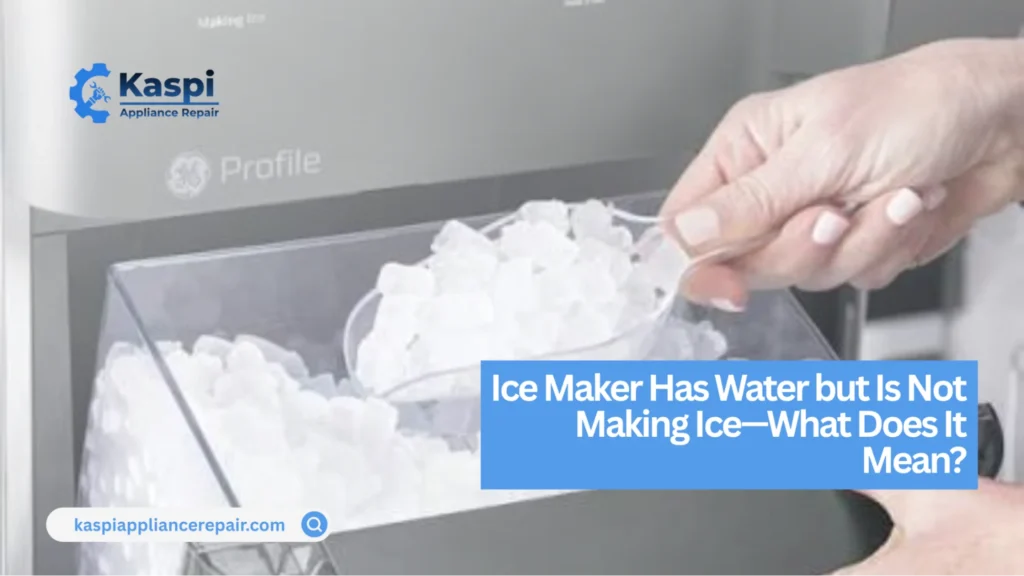
If your ice maker has water but is not making ice, the water supply is likely working, so the problem may be with the freezer temperature or the ice maker cycle. First, look at the water in the ice tray. If it stays liquid for hours, check the freezer temperature with a thermometer. The area around the ice maker may not be getting cold enough, even if other food in the freezer feels frozen.
If the water freezes but the cubes stay in the ice mold, the ice maker may not be completing its release cycle. A stuck ejector, weak motor, faulty sensor, or ice maker arm stuck in the wrong position can keep finished cubes from dropping into the bin. You may also hear clicking or notice the ejector sitting halfway through a cycle. Don’t force the moving parts by hand, as the small gears inside can break.
Because water is already reaching the tray, a clogged water filter or frozen water line is less likely to be the main cause. If your ice maker stopped making ice even though the tray fills and the water freezes, the ice maker assembly may need professional testing. The next thing to check is whether the frozen ice is simply failing to dump into the bin.
When Should You Call a Refrigerator Repair Technician?
You should call a refrigerator repair technician when your ice maker still does not make ice after basic checks, keeps freezing up, leaks water or has frozen cubes that never drop into the bin. These signs always point to a bad water inlet valve, ice maker motor, sensor, or ice maker assembly that needs proper testing.
If the ice tray stays dry even though the refrigerator has good water flow, a technician can check whether the inlet valve is actually sending water to the ice maker. If the tray fills and freezes but the ice never drops, the problem may be inside the ice maker’s motor or release system. Repeated fill tube freezing is another sign to get help. Simply thawing the tube may bring the ice maker back for a short time, but it does not fix what is causing it to freeze again.
You should also stop DIY troubleshooting if the ice maker is leaking, overfilling, making repeated clicking sounds or not working after a model-approved reset. Replacing the whole ice maker without testing it first can waste money because the real problem may be another refrigerator part.
Get Refrigerator Ice Maker Repair From Kaspi Appliance Repair
If your refrigerator ice maker is not working, Kaspi Appliance Repair can find the cause and fix the issue based on what your refrigerator actually needs. Since 2017, our technicians have worked on residential and commercial appliances, including ice maker and refrigerator repair for water, cooling, and ice production problems.
We look at how the ice maker fills, freezes, and releases each batch of ice. This helps us find problems with the fill system, ice maker controls, or other refrigerator parts that affect ice production. The goal is simple: fix the source of the problem and help your ice maker work normally again.
Kaspi Appliance Repair serves customers in Houston, Katy, Sugar Land, and Fulshear, Texas, along with service areas in Chicago, Boston, and New York City. If your ice maker stopped making ice, schedule a refrigerator repair with Kaspi Appliance Repair and get the problem checked by an experienced appliance technician.
Frequently Asked Questions About Refrigerator Ice Maker Problems
-
How do I fix my refrigerator not making ice?
Make sure the ice maker is on, the freezer is near 0°F, and water can reach the refrigerator. Check the supply line, water filter, ice maker arm and ice tray for blockages. If your refrigerator is still not making ice, the inlet valve or ice maker assembly may need testing.
-
How do I reset my refrigerator ice maker?
Check your refrigerator manual for the correct reset steps because ice maker designs vary by model. Some have a reset or test button, while others may use a power cycle. After resetting, give the freezer time to reach the right temperature and allow the ice maker to start a new cycle.
-
Does unplugging a refrigerator reset the ice maker?
Unplugging a refrigerator may reset some electronic controls, but it does not fix a clogged filter, frozen fill tube, stuck ice maker arm or failed part. If your model allows a power reset, follow the manufacturer’s instructions. If the ice maker still does not work, find the actual cause before replacing parts.
-
Why is my ice maker not filling with water?
An ice maker not filling with water may have a closed supply valve, kinked water line, clogged water filter, frozen fill tube, or faulty water inlet valve. Check the water connection and filter first. If the ice tray stays dry, the refrigerator’s fill system may need a closer diagnosis.
-
Why does my water dispenser work but my ice maker doesn’t?
If the water dispenser works but the ice maker doesn’t, water is reaching the refrigerator, but the ice maker may not be filling or cycling correctly. A frozen fill tube, freezer temperature issue, stuck shutoff arm, inlet valve problem, or failed ice maker assembly can stop ice production even when the dispenser works.