
Need it fixed today in Houston?
Licensed & insured technicians • Most repairs done same day • 90-day warranty on parts & labor
Nothing is more frustrating than opening your refrigerator and finding warm food when everything seemed fine the day before. If your Whirlpool refrigerator is not cooling, you may be wondering if it’s a simple fix or a sign of a bigger problem.
The good news is that many cooling issues can be traced to a few common causes. In this guide, we’ll walk you through the signs to watch for, the possible reasons your refrigerator is not staying cold, and the steps you can take to get it working properly again. Some fixes are quick and easy, while others may need professional help.
Why Is My Whirlpool Refrigerator Not Cooling?
If your Whirlpool fridge is not cooling, the problem normally comes down to one of three things: poor airflow, a cooling part that has stopped working, or a temperature control issue. In our experience, dirty condenser coils, blocked air vents and failed fan motors are some of the most common reasons a Whirlpool refrigerator starts getting warm.
A good clue is what the refrigerator is doing. If the freezer is still cold but the refrigerator section is warm, cold air may not be moving where it should. If both sections are warm, the issue could be related to the compressor, start relay, or another key cooling component. The symptoms you notice can always tell you where the problem starts, making it easier to find the right fix.
Whirlpool Refrigerator Not Cooling? Start With These 3 Quick Checks
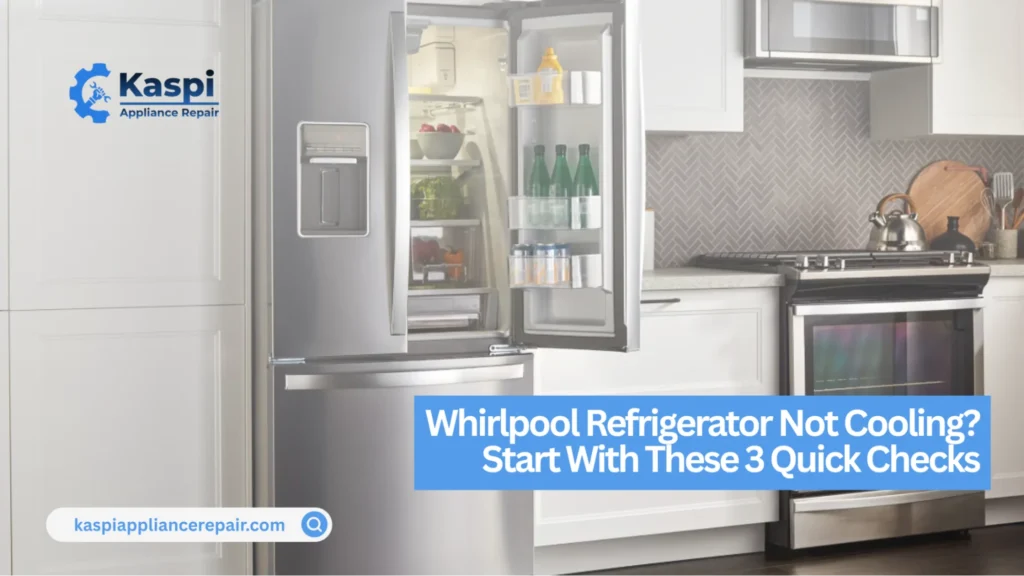
Before looking at fans, compressors or other parts, start with these simple checks. A lot of times a refrigerator not cooling is caused by a basic issue that can be fixed in just a few minutes.
1. Check the Temperature Settings
It sounds simple, but temperature settings can get changed by accident. Make sure your refrigerator is set between 35°F and 38°F and the freezer is set to 0°F. If the settings are too high, your Whirlpool fridge may not stay cold enough to keep food fresh.
2. Make Sure Air Can Move Freely
Cold air needs space to move throughout the refrigerator. If shelves are packed too tightly or food is blocking the air vents, some areas may become warm. This is a common reason homeowners notice their Whirlpool fridge cooling problems, especially when the freezer still feels cold.
3. Check the Door Seals
A refrigerator cannot stay cold if warm air keeps getting inside. Look for cracks, gaps, or dirt on the door gasket. If the door does not seal tightly, cold air can escape and force the refrigerator to work harder while still struggling to maintain the right temperature.
Whirlpool Refrigerator Not Cooling But Freezer Works: Common Causes
If your Whirlpool refrigerator is not cooling but the freezer works, the problem is usually related to airflow. The freezer creates the cold air, and part of that air is sent into the refrigerator section. When something blocks that airflow, the freezer may stay cold while the refrigerator becomes warm.
Blocked Air Vents
Cold air moves from the freezer to the refrigerator through vents. If food containers, bags, or ice block these vents, the refrigerator section may not get enough cold air. Check that the vents are clear and not covered.
Evaporator Fan Problems
The evaporator fan helps push cold air from the freezer into the refrigerator. If the fan stops working, the freezer may still feel cold, but the refrigerator will slowly warm up. A weak airflow or unusual noise can be a sign of a fan problem.
Frost Buildup on the Evaporator Coils
Too much frost around the evaporator coils can block airflow inside the appliance. When this happens, cold air cannot move properly between compartments, leading to a warm refrigerator and a cold freezer.
Damper Control Issues
The damper controls how much cold air enters the refrigerator section. If it gets stuck closed or stops working, the freezer can remain cold while the refrigerator struggles to maintain the right temperature.
In our experience, airflow problems are one of the most common reasons homeowners report a Whirlpool fridge not cooling while the freezer continues to work normally. The good news is that these symptoms often make it easier to narrow down the cause before moving on to more advanced troubleshooting.
How to Reset a Whirlpool Refrigerator
If your Whirlpool refrigerator is not cooling, a reset may help if the issue started after a power outage, power surge, or temporary control problem. While a reset won’t fix a broken part, it can restore normal operation in some cases.
Steps to Reset a Whirlpool Refrigerator
- Unplug the refrigerator from the power outlet.
- Wait about 5 to 10 minutes.
- Plug the refrigerator back in.
- Allow up to 24 hours for the refrigerator to reach the proper temperature.
If you cannot reach the plug, you can also turn the refrigerator off at the circuit breaker for a few minutes and then turn it back on.
When a Reset Won’t Help
If your Whirlpool fridge is not cooling after a reset, the problem may be related to airflow, a faulty fan, a damaged start relay, or another cooling component. In that case, further troubleshooting is needed to find the exact cause.
Whirlpool Refrigerator Not Cooling After a Power Outage
If your Whirlpool refrigerator is not cooling after a power outage, don’t panic right away. In some cases, the refrigerator simply needs time to restart and reach the proper temperature again. It can take up to 24 hours for cooling to fully return after power is restored.
Start by checking that the refrigerator has power and that the temperature settings have not changed. If everything looks normal, try performing a reset and give the appliance time to cool down.
If your Whirlpool fridge is not cooling after 24 hours, the outage may have affected a part of the cooling system. Power surges can sometimes damage components such as the control board, start relay, or compressor. You may also notice warning signs like clicking sounds, a warm interior, or a compressor that is not running.
In our experience, refrigerators that stop cooling immediately after a power outage often need a closer inspection if a reset does not solve the problem. The good news is that the symptoms usually provide valuable clues that can help identify the cause and the right repair.
Whirlpool Refrigerator Repair Costs: What to Expect
If your Whirlpool refrigerator is not cooling, the repair cost depends on which part is causing the problem. Simple fixes are usually affordable, while major cooling system repairs can cost significantly more.
| Repair Type | Typical Cost Range |
| Condenser Coil Cleaning | $100 – $250 |
| Door Gasket Replacement | $100 – $300 |
| Evaporator Fan Replacement | $150 – $400 |
| Thermostat Replacement | $150 – $350 |
| Start Relay Replacement | $150 – $300 |
| Control Board Repair | $250 – $700 |
| Refrigerant Leak Repair | $300 – $1,200 |
| Compressor Replacement | $500 – $1,500+ |
The good news is that many Whirlpool refrigerator cooling problems are caused by parts such as fan motors, thermostats, or start relays, which are often less expensive to repair than a compressor or sealed system issue.
How to Avoid Whirlpool Refrigerator Cooling Problems
A few simple maintenance habits can help prevent many Whirlpool refrigerator cooling problems and keep your appliance running efficiently for years.
Clean the Condenser Coils Regularly
Dust, pet hair, and dirt can build up on the condenser coils and make it harder for the refrigerator to remove heat. Cleaning the coils every 6 to 12 months can help improve cooling performance and reduce strain on the compressor.
Keep Air Vents Clear
Cold air needs to move freely inside the refrigerator. Avoid placing large containers or food items directly in front of the vents, as blocked airflow can lead to uneven cooling.
Check the Door Seals
Inspect the door gasket from time to time for cracks, gaps, or dirt buildup. A tight seal helps keep cold air inside and prevents the refrigerator from working harder than necessary.
Avoid Overloading the Refrigerator
Packing too much food into the refrigerator can block airflow and make it harder to maintain a consistent temperature. Leave some space between items so cold air can circulate properly.
Fix Small Problems Early
If you notice unusual noises, temperature changes, or a Whirlpool refrigerator not cooling as well as it should, address the issue early. Small problems are often easier and less expensive to fix before they turn into major repairs.
Why Homeowners Trust Kaspi Appliance Repair for Whirlpool Refrigerator Repairs
When a Whirlpool refrigerator is not cooling, the real challenge is finding the exact cause. At Kaspi Appliance Repair, we focus on solving the problem instead of guessing and replacing parts that may not be needed.
Since 2017, we’ve helped homeowners with everything from airflow issues and faulty fan motors to compressor and control board problems. Our technicians explain what is wrong, what needs to be fixed, and what can wait, so you can make an informed decision without pressure.
If your Whirlpool refrigerator is still not cooling after trying the steps in this guide, Kaspi Appliance Repair is here to help. We provide expert Whirlpool refrigerator repair services throughout Houston and nearby areas, helping homeowners get their refrigerators back to the proper temperature as quickly as possible.
Frequently Asked Questions About Whirlpool Refrigerators Not Cooling
-
Why is my Whirlpool refrigerator not cooling but the freezer works?
If your Whirlpool refrigerator is not cooling but the freezer works, the issue is usually related to airflow. Common causes include blocked air vents, a faulty evaporator fan, frost buildup on the evaporator coils, or a damaged damper control. These problems prevent cold air from reaching the refrigerator section.
-
How do I reset a Whirlpool refrigerator that is not cooling?
To reset a Whirlpool refrigerator, unplug it from the power outlet or switch off the circuit breaker for 5 to 10 minutes. Restore power and allow up to 24 hours for the refrigerator to cool properly. If it remains warm, a cooling system component may need professional inspection.
-
What causes a Whirlpool refrigerator to stop cooling?
A Whirlpool refrigerator may stop cooling due to dirty condenser coils, blocked air vents, faulty fan motors, incorrect temperature settings, a bad start relay, compressor issues, or a refrigerant leak. The exact cause often depends on whether the refrigerator is partially cooling or not cooling at all.
-
How do I know if my Whirlpool refrigerator compressor is bad?
Signs of a bad Whirlpool refrigerator compressor include warm temperatures in both the refrigerator and freezer, unusual clicking noises, a compressor that does not start, or a refrigerator that runs constantly without cooling. A professional diagnosis is usually needed to confirm compressor failure.
-
Is it worth repairing a Whirlpool refrigerator that is not cooling?
In many cases, yes. Repairs are often worth it when the problem involves a fan motor, thermostat, start relay, or control board. If the refrigerator is in good condition and the repair cost is much lower than replacement, repairing it is usually the more cost-effective option.
Tried these fixes and it’s still not working?
Don’t risk making it worse. A Kaspi technician can diagnose and repair your appliance at your home in Houston and nearby areas.
Licensed & insured • Most repairs done same day • 90-day warranty on parts & labor