You put your clothes in the washer expecting them to come out fresh and clean, but instead, you notice a musty or unpleasant smell. Sometimes, the smell comes from the washer itself. Other times, your clothes still smell bad even after a full wash cycle. If this sounds familiar, your Whirlpool washing machine may have a buildup of detergent, trapped moisture, mildew, or another issue that needs attention.
For homeowners in Houston, Texas, and nearby areas, a bad-smelling washer can quickly become a daily problem, especially when laundry does not come out as fresh as it should. The good news is that many washer odors can be fixed with proper cleaning and a few simple changes. However, if your Whirlpool washer still smells after cleaning, the cause may be deeper inside the machine or related to its drainage system.
In this guide, we’ll explain why your Whirlpool washing machine smells, how to find the source of the odor, and what you can do to get rid of it. You’ll also learn when it may be time to call a local Whirlpool washer repair technician.
What Causes a Whirlpool Washing Machine to Smell?
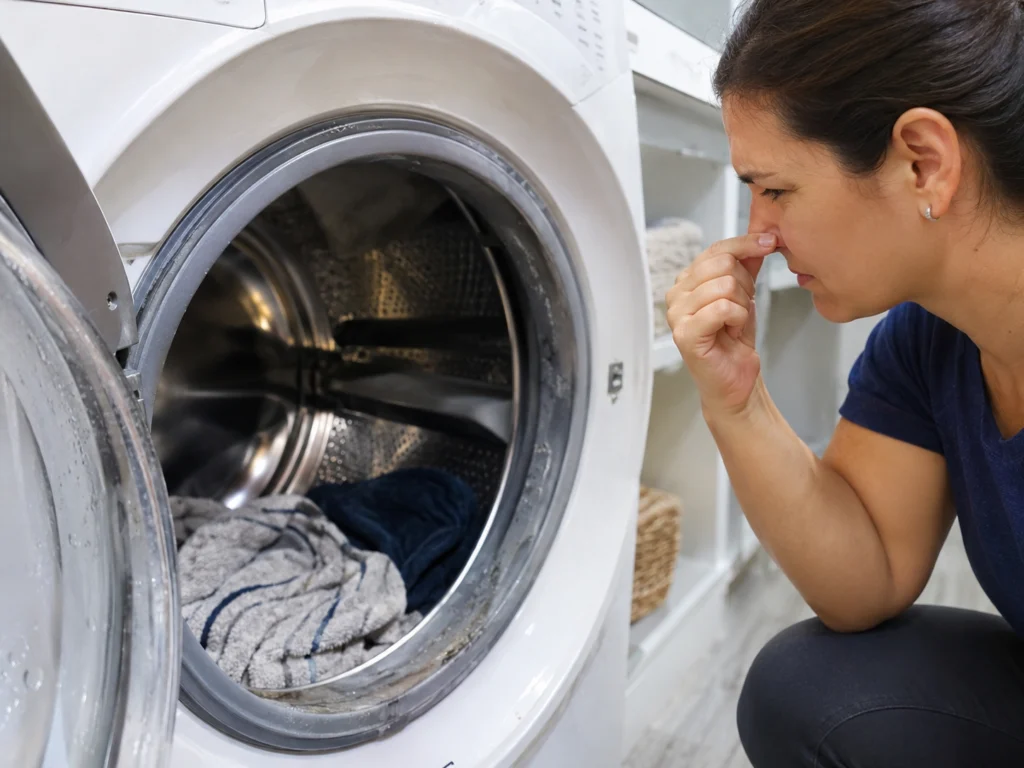
A Whirlpool washing machine usually smells bad because of trapped moisture, detergent buildup, mold, or dirty water that is not draining properly. You may notice a musty smell when opening the washer door, a rotten egg or sewage smell during a wash cycle, or clothes that still smell bad after washing. Here are the most common causes Houston-area homeowners should check.
1. Mold and Moisture Around the Washer Door Seal
If your Whirlpool front-load washer smells like mildew, check the rubber seal around the door. Water, lint, hair, and small clothing items can get trapped inside its folds. When this area stays wet, mold and mildew can grow and cause a strong musty smell. Look closely inside the rubber folds, especially near the bottom of the seal. Black spots, slimy buildup, or a damp smell are signs that the gasket needs cleaning.
2. Too Much Detergent or Fabric Softener
Using too much laundry detergent or fabric softener can make your washing machine smell worse instead of keeping it clean. Soap residue builds up inside the washer drum, detergent dispenser, and other areas that are hard to reach. Over time, this buildup traps dirt and moisture, causing a sour or musty odor. If your Whirlpool washer uses HE technology, use HE detergent and follow the recommended amount. Extra soap can also leave residue on clothes, making them smell bad after washing.
3. Clogged Drain Pump Filter or Dirty Water Inside the Washer
A clogged drain pump filter can cause a bad smell, particularly if your Whirlpool washer has standing water after a cycle. The filter catches things like coins, lint, hair, and small pieces of fabric. When these items mix with leftover dirty water, they can create an unpleasant odor. You may also notice slow draining or clothes coming out wetter than usual. Not every Whirlpool washer has a filter that homeowners can access, so check your owner’s manual before opening anything.
4. Drain Hose or Home Plumbing Problems
Does your Whirlpool washing machine smell like sewage or rotten eggs? The drain hose or household plumbing could be the reason. A blocked, kinked, or poorly installed drain hose can stop wastewater from draining correctly. In some cases, dirty water or sewer odors can travel back toward the washer through the drain connection. If the smell is strongest when the washer drains, or returns soon after cleaning, have the drain hose and plumbing checked. A washer cleaning cycle will not fix a problem in your home’s drain system.
5. Wet Laundry Left Inside the Washer
If your clothes smell musty after washing, check how long they sit inside the machine after the cycle ends. Wet towels, work clothes, and other laundry can develop a sour or mildew smell when left in a closed washer. That damp smell can also remain inside the drum and transfer to the next load. Remove clothes soon after the wash cycle finishes. If laundry already smells bad, wash it again and dry it promptly.
How to Identify Where the Bad Smell Is Coming From
Not every bad smell from a Whirlpool washing machine has the same cause. A musty odor, rotten egg smell, or sewage smell can point to different problems. If you live in Houston or another part of Texas, pay attention to when the smell appears and where it is strongest. These signs can help you narrow down the problem.
| What you notice or search for | Possible source |
| Whirlpool washer smells like mildew or mold | Moisture or residue inside the drum |
| Washing machine smells bad around the door | Odor coming from the door gasket or surrounding area |
| Whirlpool washer smells like rotten eggs | Possible drain connection or plumbing issue |
| Washing machine smells like sewage when draining | Drain hose, standpipe, or household plumbing |
| Washer smells bad near the bottom | Drain pump, accessible pump filter, or trapped water |
| Clothes smell bad after washing | Poor rinsing, detergent residue, or odor inside the washer |
| Whirlpool washer smells bad even when not in use | Lingering moisture, residue, or an odor coming from the drain connection |
One thing to check: Notice whether the smell comes from the washer itself or the drain pipe behind it. For example, if a sewage smell is strongest near the wall drain rather than the washer drum, the plumbing may be responsible. Cleaning the washer alone will not solve that problem.
If the odor keeps returning after cleaning, or your Whirlpool washer also has standing water or drainage problems, a technician can inspect the drain system and internal components to find the source.
How to Clean a Whirlpool Washing Machine and Remove Bad Odors
If your Whirlpool washing machine smells bad, a proper cleaning can often help remove mildew, soap buildup, and unpleasant odors. You do not need to take the washer apart to start. Begin with the manufacturer’s cleaning cycle, then clean the areas you can safely reach, such as the door seal, detergent dispenser, and accessible drain pump filter.
Run the Clean Washer Cycle
The Clean Washer cycle is one of the best ways to remove odor-causing residue from inside a Whirlpool washing machine. Whirlpool recommends cleaning the washer at least once a month or every 30 wash cycles, whichever comes first.
Follow these steps:
- Empty the washer: Remove all clothes, towels, and other items from the drum.
- Add a washer cleaner: Place one affresh® Washer Cleaner tablet at the bottom of the washer basket or drum. Do not put the tablet in the detergent dispenser.
- Select the cleaning cycle: Close the door or lid, choose the Clean Washer cycle, and start the machine. Follow your model’s instructions if the cycle has a different name.
- Let the cycle finish: Allow the full cleaning cycle to run without interruption so the cleaner can work properly.
- Allow the washer to dry: When the cycle ends, leave the door or lid open to let moisture escape.
If your Whirlpool washer does not have a Clean Washer cycle, check the owner’s manual for the recommended cleaning cycle and product instructions. Whirlpool also provides a liquid chlorine bleach cleaning procedure for certain models. Do not combine bleach with affresh®, vinegar, or any other cleaning chemical.
Important: Avoid using vinegar as a regular washing machine cleaner. Whirlpool warns that repeated vinegar use can damage some washer components. Always follow the cleaning instructions for your specific model.
Clean the Door Seal, Dispenser and Accessible Filter
Running a Clean Washer cycle does not remove every bit of dirt from the areas you can reach by hand. For a more complete Whirlpool washer cleaning, check the following parts:
- Rubber door seal: Open the door and gently pull back the rubber gasket to check for lint, hair, dirt, and leftover water. Wipe the folds with a soft, damp cloth or an approved washer cleaning wipe. Pay attention to the lower part of the seal, where water and debris can collect. Dry the area with a clean towel when finished.
- Detergent dispenser: Remove the dispenser drawer if your Whirlpool model allows it. Rinse away dried detergent and fabric softener, clean the compartments with a soft cloth, and dry them before putting the drawer back. If the dispenser is fixed in place, wipe the accessible surfaces without forcing or removing any parts.
- Drain pump filter: Some Whirlpool front-load washers have an accessible drain pump filter that collects lint, hair, coins, and other small items. If your model has one, turn off and unplug the washer first. Follow the owner’s manual to drain any remaining water into a shallow container, remove the filter, rinse away trapped debris, and reinstall it securely. Not all Whirlpool washers have a user-accessible filter, so never open panels or remove parts just to find one.
After cleaning, check that the dispenser and filter are properly fitted before using the washer again. If your Whirlpool washer still smells like mildew or sewage, or water remains inside after a cycle, the odor may be coming from a drainage problem or an internal part that needs professional attention.
Why Should You Call Kaspi Appliance Repair for Whirlpool Washing Machine Repair?
Cleaning your Whirlpool washing machine may remove surface odors, but it will not fix every problem. If the bad smell keeps coming back, the washer does not drain properly, or you notice unusual sounds during a cycle, there may be an issue with an internal component. Ignoring these signs can lead to bigger repair problems.
Here are some situations when professional Whirlpool washer repair makes sense:
- Bad smell that keeps returning: If your Whirlpool washer still smells like mildew or sewage after cleaning, a technician can inspect the drain system, pump, and other areas that may be holding dirty water or causing the odor.
- Washer not draining properly: Standing water, a slow drain, or clothes coming out soaking wet may point to a drain pump, hose, or other drainage problem. Proper testing helps identify what is stopping the water from leaving the machine.
- Loud or unusual noises: Grinding, rattling, banging, or humming sounds during a wash or spin cycle may indicate a problem with the pump, drum support, motor, or another moving part.
- Burning or electrical smell: Stop using the washer immediately if you notice a burning smell. Disconnect power only if it is safe to do so, and arrange a professional inspection before running another cycle.
Why Houston Homeowners Choose Kaspi Appliance Repair
Kaspi Appliance Repair is a local appliance repair company serving Houston and nearby Texas communities. With 9+ years of appliance repair experience, the company has built experience working with major washer brands, including Whirlpool. Its team includes certified technicians who understand the different problems found in front-load, top-load, and high-efficiency washing machines.
Whether your Whirlpool washer has a drainage problem, makes unusual noises, or continues to produce unpleasant odors, Kaspi focuses on finding the actual cause rather than recommending a temporary fix. The team serves homeowners in Houston, Katy, Sugar Land, Pearland, Cypress, Spring, and other nearby areas.
If your washer needs more than routine cleaning, visit our Whirlpool washer repair service in Houston, TX to learn more about our repair services and schedule professional help.
Frequently Asked Questions About Whirlpool Washing Machine Smells
-
Why does my Whirlpool washing machine smell like mildew?
A Whirlpool washing machine can smell like mildew when moisture, detergent residue, and dirt collect inside the drum, door gasket, or dispenser. Clean the washer using the recommended Clean Washer cycle, wipe the rubber seal, and leave the door open between loads. If the musty smell keeps returning, the machine may need a closer inspection.
-
Why does my Whirlpool washer smell like rotten eggs?
A rotten egg smell from a Whirlpool washer may come from a drain connection, household plumbing, or trapped dirty water. Check whether the odor becomes stronger when the machine drains. If the smell also comes from nearby drains, the plumbing may need attention. Do not assume that cleaning the washer drum will fix a sewer gas problem.
-
Why does my washing machine smell like sewage when draining?
A washing machine that smells like sewage during draining may have a problem with its drain hose, standpipe, or household plumbing. An incorrect drain hose installation or a blocked drain can allow unpleasant odors to reach the laundry area. Have the drain connection inspected if the sewage smell continues after cleaning the washer.
-
Why do my clothes smell bad after washing in my Whirlpool washer?
Clothes may smell bad after washing because of detergent buildup, poor rinsing, or an odor inside the washing machine. Wet laundry left in the drum can also develop a sour smell. Clean the washer, use the correct amount of HE detergent, and remove clothes promptly after each cycle. Rewash laundry that still smells musty.
-
How often should I clean my Whirlpool washing machine?
Whirlpool recommends running the Clean Washer cycle at least once a month or every 30 wash cycles, whichever comes first. You should also wipe the door gasket and dispenser regularly, remove wet clothes promptly, and allow the washer to dry between loads. Always check your owner’s manual for model-specific cleaning instructions.
-
Can a dirty drain pump filter cause a Whirlpool washer to smell bad?
Yes. A dirty drain pump filter can collect lint, hair, coins, and other debris that mix with leftover water and cause unpleasant odors. You may also notice slow draining or standing water. Check your Whirlpool owner’s manual before cleaning the filter because not every washer model has a user-accessible drain pump filter.
-
Why does my Whirlpool top-load washer smell bad?
A Whirlpool top-load washer can develop a bad smell when detergent residue, dirt, and moisture collect inside the wash basket or other internal areas. Using too much detergent and leaving wet clothes inside can make the odor worse. Run the recommended Clean Washer cycle and leave the lid open between loads to help the interior dry.
-
Why does my Whirlpool washer still smell after cleaning?
If your Whirlpool washer still smells after cleaning, the odor may be coming from an area the cleaning cycle cannot fully reach. A clogged drain system, leftover water, plumbing issue, or internal buildup may be responsible. Check the drain connection and follow your model’s cleaning instructions. Arrange a professional inspection if the smell continues.