
Need it fixed today in Houston?
Licensed & insured technicians • Most repairs done same day • 90-day warranty on replaced parts
Finding a puddle of water in front of your KitchenAid refrigerator can be frustrating, especially when you’re worried about damaged floors, spoiled food, or an expensive repair bill. The good news is that some leaks have simple causes you can check yourself.
Your KitchenAid refrigerator may be leaking because of a clogged defrost drain, a loose water line, a poorly fitted water filter, or an issue with the ice maker. The first step is to find where the water is coming from. In this guide, we’ll walk you through the common causes, show you what to check at home, and explain when it’s time to call a refrigerator repair technician.
Why Is My KitchenAid Refrigerator Leaking Water on the Floor?
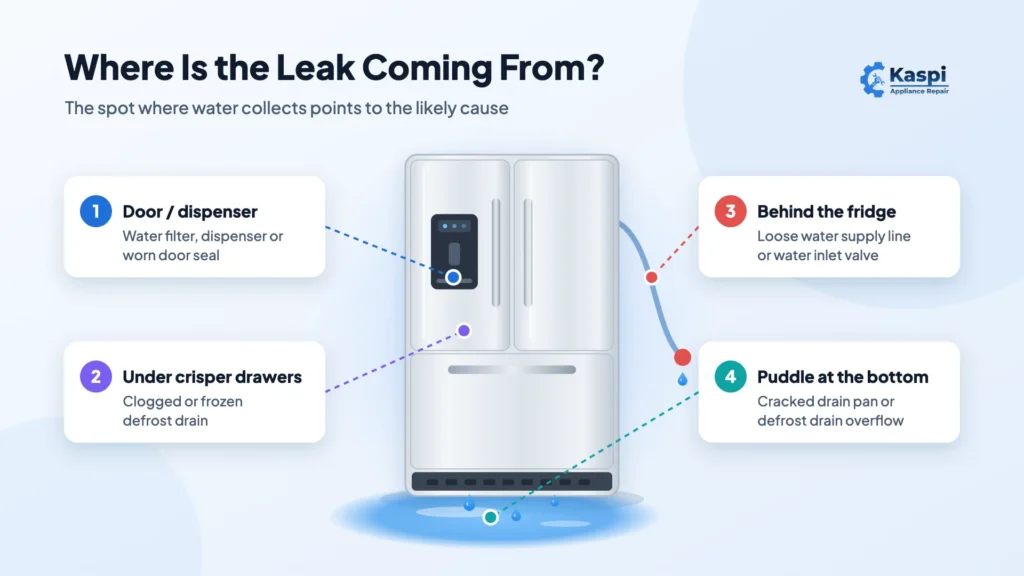
A KitchenAid refrigerator leaking water on the floor is usually caused by a clogged defrost drain, a loose water supply line, a leaking water filter, or an ice maker problem. A damaged drain pan or faulty water inlet valve can also cause water to collect underneath the fridge. The location of the puddle can help you narrow down the cause before you start troubleshooting.
Here are the most common reasons to check:
- Clogged defrost drain: If water collects under the crisper drawers or leaks from the bottom of your refrigerator, the defrost drain may be blocked by ice or debris. The water cannot drain properly and may spill onto the floor.
- Loose or damaged water line: If you notice water behind your KitchenAid refrigerator, check for a loose connection or cracked supply line. A leaking connection can cause a steady puddle.
- Water filter installed incorrectly: If the leak started after changing your refrigerator water filter, the filter may not be fully locked into place. A damaged seal or missing O-ring can also let water escape.
- Ice maker or water dispenser problem: A blocked ice chute, misaligned ice maker fill cup, or loose water connection can cause dripping or water to collect near the front or back of the fridge.
- Damaged drain pan or water inlet valve: A cracked drain pan may leak onto the floor, while a faulty water inlet valve can allow water to escape from the refrigerator’s water supply system.
Before checking anything else, dry the floor and look at where the water is coming from. If the leak appears to be coming from the water supply line, turn off the refrigerator’s water supply if you can do so safely. This helps limit water damage while you identify the problem.
The exact cause depends on your KitchenAid refrigerator model and where the leak begins. The next step is to check the likely source and determine whether you can fix it safely yourself. For a wider look at leaks across all brands, see our guide to a refrigerator leaking water.
Common Reasons Your KitchenAid Refrigerator Is Leaking
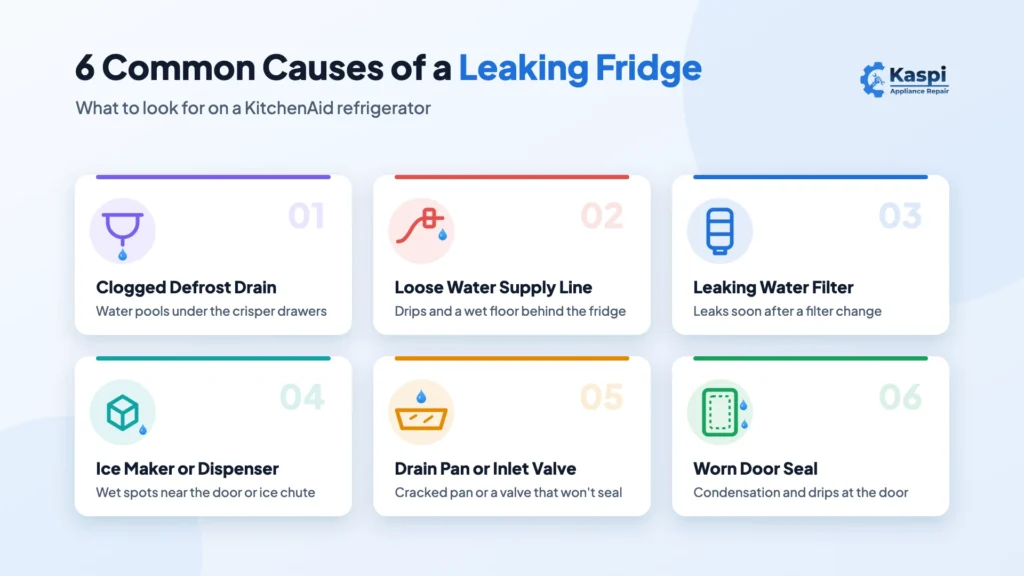
A KitchenAid refrigerator can leak for several reasons, and the cause often depends on which part of the appliance is affected. Here are six common problems that can lead to water on your kitchen floor.
1. Clogged or Frozen Defrost Drain
Your refrigerator melts frost during its regular defrost cycle, and the water should flow through a drain into a collection pan. If the drain becomes blocked by ice or food debris, water can back up inside the fridge and leak onto the floor. You may also notice water pooling beneath the vegetable drawers.
2. Loose or Damaged Water Supply Line
The water line carries water to your refrigerator’s ice maker and dispenser. If the tubing cracks or a connection becomes loose, water may drip behind the appliance and spread across the floor. Check for visible moisture around the connections, but avoid pulling on the tubing or tightening fittings while the line is pressurized.
3. Incorrectly Installed or Leaking Water Filter
A water filter that is not seated correctly can allow water to escape from its housing. A worn seal or damaged filter head can cause the same problem. If the leak started soon after you replaced the filter, check that it is the correct type for your model and that it is installed according to the manufacturer’s instructions.
4. Ice Maker or Water Dispenser Problems
An ice maker can leak if its fill tube is blocked with ice, its fill cup is misaligned, or a water connection is damaged. A dispenser that continues dripping after use can also leave water near the refrigerator door. Look for excess ice, wet spots around the dispenser, or water near the ice maker before deciding what needs repair. Our guide to water dispenser problems covers more of these symptoms.
5. Damaged Drain Pan or Faulty Water Inlet Valve
The drain pan collects water from the defrost cycle so it can evaporate. If the pan is cracked or out of position, water may reach the floor. A faulty water inlet valve can also leak or fail to control the flow of water correctly. These problems may require a technician to inspect the affected parts and replace them if necessary.
6. Worn Door Seal or Excess Condensation
A loose, dirty, or damaged door gasket can let warm, moist air enter the refrigerator. This can cause extra condensation, water droplets on shelves, or moisture around the door. Clean the gasket and check for visible gaps or tears. If the door still does not seal properly, the gasket or door alignment may need attention. A poor seal also makes the fridge work harder and can lead to refrigerator cooling problems.
How to Troubleshoot a Leaking KitchenAid Refrigerator
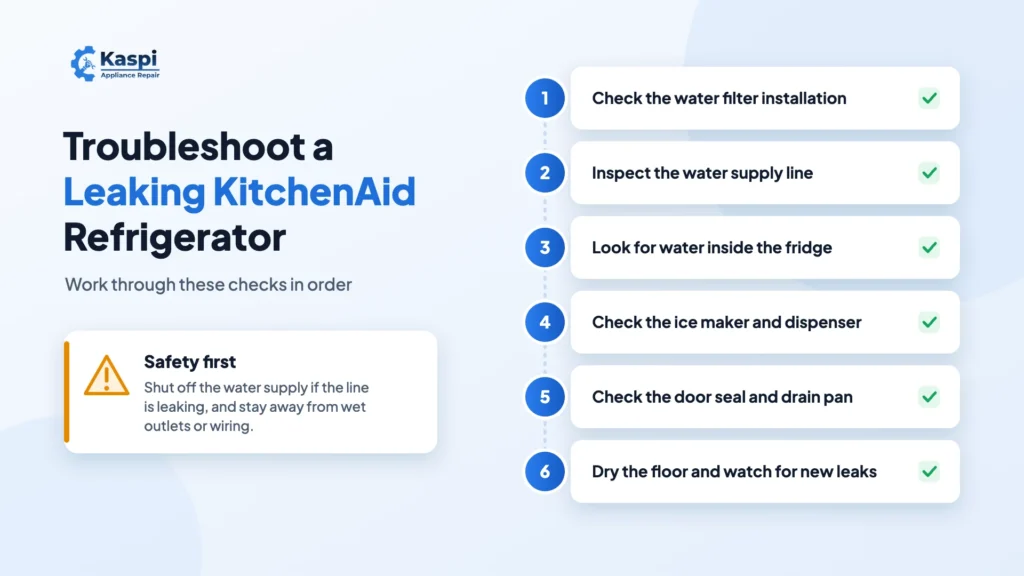
If your KitchenAid refrigerator is leaking water, start with a few simple checks before paying for a repair. You may be able to find the problem by checking the water filter, inspecting the water line, and looking for ice or standing water inside the fridge. Follow these steps in order.
1. Check the Water Filter Installation
If you notice water leaking after changing your KitchenAid refrigerator water filter, check that it is fully inserted and locked into place. Follow your model’s instructions to remove and reinstall it. Look for a damaged seal or cracks in the filter housing. If the leak continues after correct installation, stop using the water dispenser until the problem is resolved.
2. Inspect the Water Supply Line
Look behind the refrigerator for wet tubing, dripping connections, or water around the shut-off valve. If you find a leak, turn off the water supply before doing anything else. Do not pull, bend, or disconnect the line while water is flowing. Replace damaged tubing or have a technician repair a leaking connection.
3. Look for Water Inside the Refrigerator
Check beneath the crisper drawers, along the back wall, and around the freezer floor. Water under the vegetable drawers can point to a blocked defrost drain, while ice buildup on the freezer floor may suggest that defrost water is not draining properly. Remove loose food debris from accessible areas, but do not chip away ice with a knife or sharp tool.
4. Check the Ice Maker and Water Dispenser
Look for excess ice around the ice maker, water dripping from the dispenser, or moisture near the ice chute. If the ice maker is not working properly and you suspect it is causing the leak, switch it off using the manufacturer’s instructions. If water continues to escape, shut off the water supply if safe and arrange a repair.
5. Check the Door Seal and Drain Pan
Inspect the rubber door gasket for dirt, tears, or gaps that could let warm air inside. Clean it with a soft cloth and mild soapy water, then check that the door closes fully. If your model has an accessible drain pan, look for visible cracks or signs of overflow. Do not remove panels to reach internal parts unless the manufacturer specifically permits it.
6. Clean Up the Water and Check for Further Leaks
Dry the floor and nearby surfaces to prevent slipping and water damage. Watch to see whether water returns and note where it first appears. If the leak is near an electrical outlet or damaged wiring, avoid touching the wet area or appliance and switch off power only if you can do so safely. Get professional help if there is an electrical risk or the source remains unclear.
If these checks do not stop the leak, the problem may involve an internal drain, valve, or water-system component. Avoid taking the refrigerator apart to find it. A qualified appliance repair technician can identify the faulty part and determine what needs to be repaired. Not sure if it is time? These signs your appliance needs professional repair can help you decide.
Schedule KitchenAid Refrigerator Repair with Kaspi Appliance Repair in Houston, TX

A leaking KitchenAid refrigerator can quickly become a bigger problem if water keeps reaching your kitchen floor or cabinets. If you have tried the basic troubleshooting steps and the leak won’t stop, Kaspi Appliance Repair is here to help. With 9+ years of experience, 1,200+ appliances repaired, and 260+ five-star reviews, we help Houston homeowners get their appliances back in working order.
Our technicians specialize in KitchenAid refrigerator repair across a range of models, from older refrigerators to newer, high-end units with built-in ice makers, water dispensers, and advanced cooling systems. We inspect the source of the leak, explain what needs attention, and recommend a repair based on your refrigerator’s condition.
Here’s what you can expect when you schedule service with Kaspi:
- Experienced local technicians: Licensed and insured technicians who understand common refrigerator problems and repair needs.
- 90-day repair warranty: All KitchenAid repairs come with a 90-day warranty on parts replacement.
- Clear diagnostic pricing: The diagnostic fee is $75 and is waived when you proceed with the repair.
- Local Houston service: Visit us at 1506 Robin St, Houston, TX 77019, or call (713) 269-4742 to arrange service.
Don’t let a small refrigerator leak damage your flooring or turn into a recurring problem. Contact Kaspi Appliance Repair to schedule KitchenAid refrigerator repair in Houston, TX, and get a clear explanation of the problem and the recommended fix.
Frequently Asked Questions About KitchenAid Refrigerator Leaks
1. Why is my KitchenAid refrigerator leaking water on the floor?
A KitchenAid refrigerator leaking water on the floor may have a clogged defrost drain, a damaged water supply line, or a leaking filter. An ice maker or water inlet valve can also cause leaks. Check whether the water comes from the front, back, or inside the refrigerator to narrow down the cause before arranging a repair.
2. Why is my KitchenAid refrigerator leaking water from the bottom?
Water leaking from the bottom of a KitchenAid refrigerator can come from an overflowing defrost drain, a damaged drain pan, or a leaking water connection. Check for water behind the appliance and inside the freezer. If you cannot find the source or the leak continues, a refrigerator technician can inspect the drainage and water system.
3. Why is there water under the crisper drawers in my KitchenAid refrigerator?
Water under the crisper drawers often points to a clogged or frozen defrost drain. During defrosting, melted frost should flow through the drain into a collection pan. When the drain becomes blocked, water can collect inside the refrigerator. Remove accessible debris, but avoid sharp tools. If the water returns, the drain may need professional cleaning or repair.
4. Why is my KitchenAid refrigerator leaking after changing the water filter?
If your KitchenAid refrigerator leaks after a filter change, the filter may not be fully seated, or its seal may be damaged or missing. Check your model’s instructions and reinstall the correct filter. Inspect the visible seals for damage. If water continues leaking from the filter housing, stop using the dispenser and arrange a repair.
5. Can a clogged defrost drain cause a KitchenAid refrigerator to leak?
Yes. A clogged or frozen defrost drain can stop melted frost from draining properly. Water may collect under the crisper drawers, pool on the freezer floor, or eventually leak onto your kitchen floor. Clear only accessible debris safely. If ice repeatedly blocks the drain, a technician may need to find the underlying cause.
6. Why is my KitchenAid refrigerator ice maker leaking water?
A leaking KitchenAid ice maker may have a misaligned fill cup, a blocked fill tube, or a loose water connection. Check for excess ice in the bin and around the ice chute. If water continues dripping, turn off the ice maker according to your model’s instructions. A leaking valve or internal connection may require professional repair. If you are in Katy, our KitchenAid ice maker repair team can test the fill tube and water valve.
7. Is it safe to use a KitchenAid refrigerator that is leaking water?
It depends on the source of the leak. A small drip may not stop the refrigerator from cooling, but water can damage flooring and create an electrical hazard. Clean up standing water and shut off the water supply if a supply-line leak is suspected. If water reaches electrical parts, stay clear and seek professional help.
8. How much does KitchenAid refrigerator leak repair cost in Houston, TX?
The cost of KitchenAid refrigerator leak repair depends on the cause, the parts needed, and the labor involved. Kaspi Appliance Repair charges a $75 diagnostic fee, which is waived when you proceed with the repair. The technician can identify the problem and explain the recommended repair cost before the work begins. For typical price ranges, see our guide to refrigerator repair cost in Houston.
Tried these fixes and it’s still not working?
Don’t risk making it worse. A Kaspi technician can diagnose and repair your appliance at your home in Houston and nearby areas.
Licensed & insured • Most repairs done same day • 90-day warranty on replaced parts