
Your refrigerator just stopped cooling. Again. It’s 2 AM, your fridge feels like a sauna, and you’re already Googling replacement prices.
Hold up. Before you panic and call for repairs, here’s the thing: most refrigerator problems aren’t actually emergencies. Some are super easy fixes, the kind that take five minutes and nothing but a dollar bill. Others will definitely need a professional, but at least you’ll know exactly what went wrong.
I’ve been working on appliances in Houston for years, and I see the same problems over and over. Let me walk you through the nine most common refrigerator issues we deal with here in the area. By the time you finish reading this, you’ll know whether your fridge just needs a quick tune-up or if it’s time to call someone in.
Why Are Refrigerators Breaking Down in Houston?
Before we get into the specific problems, you need to understand why Houston is particularly rough on appliances. It’s hot, it’s humid, and our power sometimes gets a little weird during storms. Your refrigerator this relatively simple machine that just moves cold air around—is working overtime compared to what it handles in, say, Arizona or Colorado.
The condenser coils get clogged with dust faster here. The compressor works longer because your fridge constantly fights against the heat. Power fluctuations can mess with the controls. It all adds up. Your neighbor in Dallas might get 15 years out of a refrigerator. In Houston? Maybe 12. That’s just reality.

Problem #1: Your Fridge is Running But Nothing Inside is Cold
This one is the most common call we get. The fridge is humming along, sounds normal, but when you reach in for milk, it’s warm. Your ice cream has turned to soup.
What’s happening: Usually it’s one of three things. Either your temperature dial got bumped (seriously, this happens more often than you’d think), airflow got blocked by stuff crammed on the shelves, or the little fan that pushes cold air around died.
What you should check first: Look at your temperature dial. If someone fiddled with it—kids, roommate, whoever—crank it back to normal. For most fridges that’s around 37-40 degrees. Give it a few hours and see if things start getting cold again.
Then look inside. Pull stuff off the back wall and shelves right in front of the air vent. I’ve found bags of frozen vegetables, empty containers, even a science project that somebody forgot about pushed right up against the vent. That blocks everything.
When to call someone: If you’ve adjusted the temperature and cleared the vents and your fridge is still warm after a few hours, something internal probably failed. The evaporator fan motor (that little thing that moves air) or the compressor might be toast. Don’t mess with this yourself.
Problem #2: Your Freezer Looks Like an Ice Cave
You open the freezer door and there’s basically a frozen glacier in there. The vents are completely blocked with ice.
What’s happening: Your refrigerator’s supposed to automatically melt frost and drain it away. When that doesn’t happen, frost just builds up. And builds up. And builds up until nothing fits.
What you can check: Here’s the easy fix that works about 30% of the time. Unplug your fridge. Seriously, pull the plug. Let it sit for a couple hours. The ice will melt.
While you’re waiting, crawl behind or under your fridge and look for the drain hole. It’s usually at the bottom back, sometimes hidden behind a removable panel. Grab some warm water, get a small pipe cleaner or even a straightened-out paperclip, and gently flush it through. You might be surprised how often a simple blockage is the culprit.
When to call someone: If you do all that and the frost comes roaring back within a few weeks, your defrost system’s broken. That needs professional work.
Problem #3: Water’s Pooling Under Your Fridge
You notice a puddle when you get home. Or maybe it’s just inside the crisper drawers—everything’s sitting in water.
What’s happening: Same defrost system we just talked about. Or the water line to your ice maker has a leak. Sometimes the drain pan under the fridge is just full or cracked.
What you should check: Get down there and look at the drain pan under your fridge. If it’s full, your drain line is clogged. If it’s cracked, well, time for a new pan (they’re cheap). Flush the drain line with warm water like we talked about above.
For leaks inside the fridge, check if something’s blocking the drain hole—usually at the very back of the fridge or underneath the crisper drawers. Move whatever’s in the way.
When to call someone: If water keeps coming back after you’ve cleaned the drain, there might be a leak in the internal components or the water supply line. That’s a pro job.
Problem #4: Your Electric Bill Just Spiked and Your Fridge Never Stops Running
Normally your fridge cycles on and off. But lately it’s always on, humming constantly. Your electric bill looks crazy.
What’s causing this: Dirty condenser coils are the number one culprit. When dust and pet hair coat those coils, they can’t release heat properly. Your compressor just keeps grinding away trying to catch up.
Second place goes to a bad door seal. If that rubber gasket around your door is worn or loose, warm air leaks in constantly. Your fridge never stops trying to cool down.
What you can check: Unplug your fridge and look at the coils. Most are on the back. Some are underneath. If they’re fuzzy with dust, that’s your problem. Grab a vacuum (gently!) or a soft brush and clean them off. Takes 10 minutes. Seriously.
For the door seal, close your fridge on a dollar bill. Pull the door. If the bill slides out easy, you need a new seal. These aren’t expensive and they make a huge difference.
When to call someone: If the compressor keeps running nonstop even after you’ve cleaned everything, the compressor itself might be failing. Time for a pro.
Problem #5: Your Fridge is Making Weird Noises
Clicking. Buzzing. Grinding. Sounds that definitely weren’t there before.
What’s happening: Depends on the sound. Clicking usually means the compressor is struggling to start. Buzzing might be a fan hitting frost. Grinding is the scary one—a mechanical part wearing out. Rattling is usually just loose stuff, thank goodness.
What you should check: First, check if something’s on top of your fridge vibrating. Move it. Sometimes that’s literally the whole problem.
Listen closely to figure out where the sound is coming from. Back of the fridge? Bottom? Inside? That tells a technician a lot. Don’t ignore weird sounds. They usually get worse, not better.
When to call someone: If you hear grinding or repeated clicking that doesn’t stop, call someone. These aren’t DIY fixes.
Problem #6: Your Fridge Can’t Make Up Its Mind About Temperature
Some spots in your fridge are freezing your lettuce. Other spots feel warm. It’s all over the place.
What’s happening: Houston’s humidity doesn’t help. But usually it’s either the thermostat dial set too low or the thermostat sensor is acting up. Sometimes cold air gets stuck in one area and doesn’t distribute right.
What you should check: Nudge the temperature dial up slightly and wait 24 hours. See if things stabilize. Make sure you’re not stacking stuff in a way that blocks air circulation. Refrigerators need air to move around inside, not a packed maze.
When to call someone: If it’s still bouncing around after you’ve adjusted things, the thermostat sensor probably needs replacing.
Problem #7: Your Ice Maker Died
You reach for an ice cube and… nothing. The ice maker looks fine but it’s not making ice.
What’s happening: Water supply got cut off somehow. Maybe the line got kinked, the shutoff valve got closed, or in winter the line actually froze solid.
What you should check: Look behind your fridge at that water line. Is it bent or kinked? Straighten it out. Check the shutoff valve (it’s right where the line comes out of the wall). Make sure it’s turned all the way on. If you touch the water line and it’s cold but nothing’s coming out, it might be frozen. You can gently warm it up, but be careful not to damage the plastic.
When to call someone: If the line isn’t kinked, the valve is open, and water still isn’t flowing, there’s probably an internal blockage or the valve actually failed. Need a pro.
Problem #8: The Condenser Coils are Filthy
You’ve heard that dirty coils are bad. You’re not sure how bad or what to even look for.
The reality in Houston: We get dust everywhere. If you have pets, their hair gets sucked toward those coils constantly. Between the heat, humidity, and dust, Houston is basically a coil-clogging nightmare.
What you can check: Unplug your fridge. Look at the coils. They’re probably on the back or underneath. Shine a flashlight. If they look like they’re covered in a fuzzy blanket of dust, that’s the problem. A gentle vacuum with a brush attachment or just a soft brush works great. This one task can add years to your fridge’s life and noticeably lower your electric bill. Seriously. Do this every six months here in Houston.
When to call someone: If the coils are bent, damaged, or you can’t reach them safely, get a pro to clean them.
Problem #9: Your Compressor is Dying (Or Already Dead)
You hear a loud hum that sounds wrong. Or a clicking that won’t stop. Or your fridge just completely stopped working.
What’s happening: The compressor—that’s the engine of your cooling system—might be failing. Or there’s an electrical problem. Either way, this is the serious stuff.
What you can check: Make sure the outlet’s actually working by plugging in a lamp or phone charger. Make sure nothing unplugged the thing. That actually happens.
Listen to the compressor. A normal hum changes pitch slightly when it cycles. A constant loud hum or repeating clicks means something’s stressed.
When to call someone: Never try to fix the compressor yourself. Ever. Refrigerants, electrical components, sealed systems—this isn’t a DIY thing. Call someone immediately. The longer a failing compressor keeps running, the more damage it does.
Houston-Specific Stuff You Should Know

Your fridge works harder here. The heat’s brutal and humidity’s constant. In summer, your compressor’s basically grinding 24/7. Make sure your kitchen’s got decent ventilation. Sunlight right on your fridge? Move it if you can. Check those coils more often maybe every 2-3 months instead of once a year.
When we lose power (and we do, especially in summer storms), keep your fridge door closed. A closed fridge stays cold for hours. Once power comes back, it’ll cool down on its own.
Why Homeowner and Business owner bring Kaspi Appliance Repair in Houston
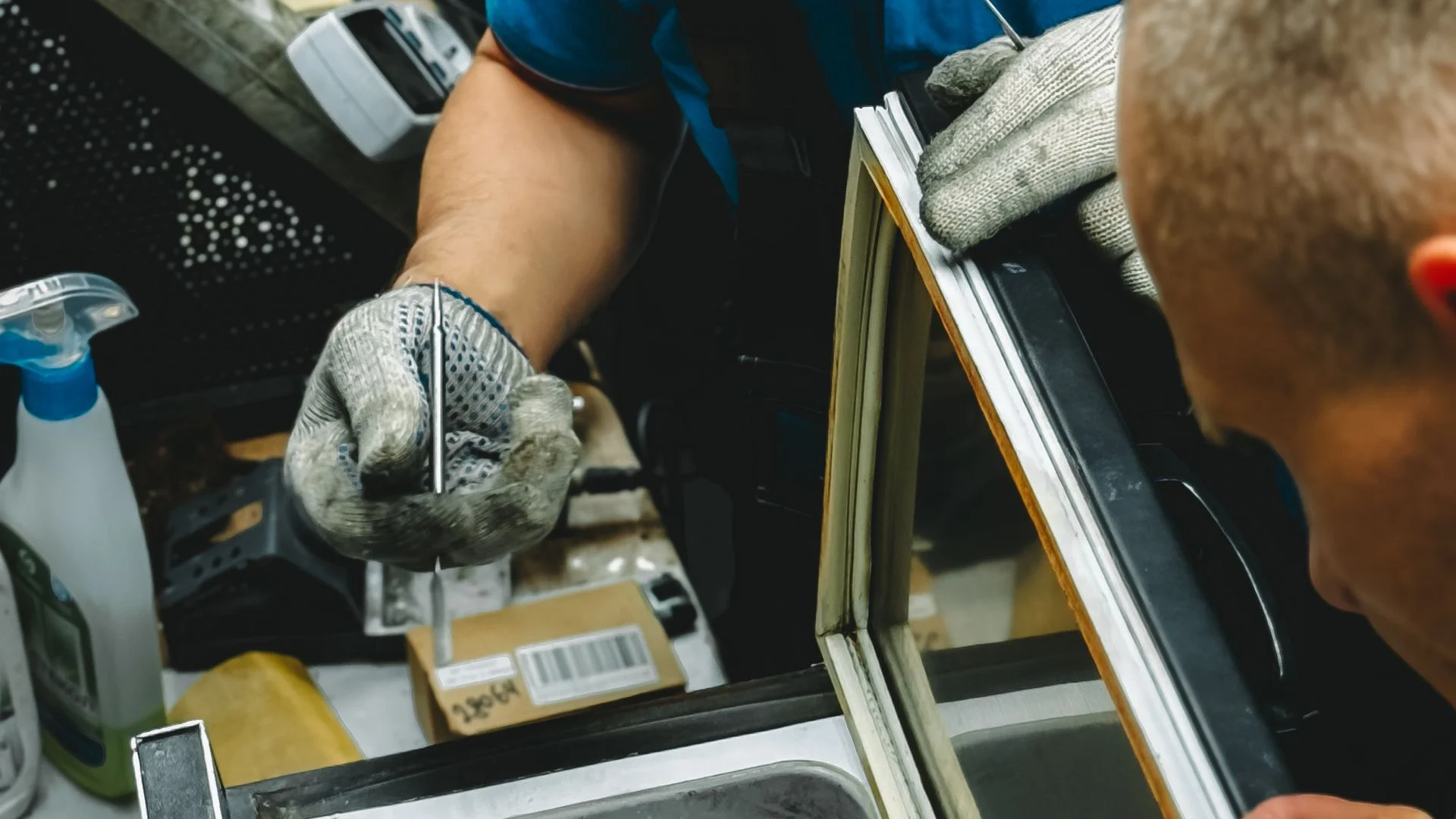
Since 2017, our team has completed over 3,000 refrigerator repairs across Houston with 600+ Google 5-star reviews. Our lead technician Alexander Hamilton brings 12+ years of appliance repair experience, supported by certified specialists trained on every major brand – GE, Frigidaire, KitchenAid, Whirlpool, LG, Samsung, and more. Whether your fridge is vintage or brand new, we know exactly how to fix it.
We charge $75 to diagnose the problem, and we’ll waive that fee if you go ahead with the repair. You get a 90-day warranty on parts replacement. Most repairs are completed the same day you call – no hidden fees, just upfront quotes and honest work.
Call Kaspi at +1 713-269-4742 or book online to schedule your service. We’ll diagnose your problem, give you a quote, and get your refrigerator back to work. That’s why over 600 customers have rated us 5 stars on Google and trusted us to fix their appliances.
Quick Questions People Always Ask
-
How Long Should My Fridge Last?
Most refrigerators last 10-15 years with proper maintenance. In Houston’s heat and humidity, they work harder, so regular coil cleaning and annual check-ups extend their lifespan. Simple preventive maintenance keeping coils clean, checking seals, clearing drains—can add years to your appliance. If your fridge is past 15 years and needs repairs, replacement might make more financial sense.
-
Should I Repair or Replace My Refrigerator?
Consider repair if it costs less than 50% of a new fridge’s price and your unit is under 10 years old. Newer fridges are more efficient, but repairing works for most situations. For older units with repeated problems, replacement saves money long-term. Get a professional diagnosis before deciding sometimes a simple $200 fix beats a $2,000 replacement.
-
What’s the Correct Temperature Setting?
Set your fridge compartment to 37-40°F and freezer to 0°F. These temperatures keep food safe while preventing excessive ice buildup and energy waste. Most modern fridges have digital displays showing current temperature. Check yours weekly with a thermometer to ensure accuracy. Incorrect settings cause food spoilage, frost buildup, or compressor overwork all preventable with proper adjustment.
-
Can I Fix My Refrigerator Myself?
Yes, for simple maintenance: adjust temperature, clean condenser coils, clear drain holes, and check door seals. Don’t attempt repairs involving refrigerant, electrical components, or the compressor—these require professional certification. DIY mistakes can void warranties and create safety hazards. Start with basic troubleshooting; if problems persist after 24 hours, call a professional before causing expensive damage.
-
How always Should I maintain my Fridge?
Clean condenser coils every 6 months—this is the most important maintenance task. Check door seals monthly and clear defrost drains quarterly. Schedule a professional inspection annually, especially in Houston where dust and humidity accelerate wear. Simple preventive maintenance prevents 70% of common refrigerator problems. Neglecting maintenance costs significantly more in repairs than investing in regular upkeep now.
-
What Do Different Refrigerator Noises Mean?
Clicking sounds usually indicate normal operation or ice maker activity. Buzzing suggests fan or compressor issues. Grinding noises mean mechanical problems requiring immediate attention. Hissing indicates refrigerant flow normal but monitor it. Loud humming suggests compressor strain. Record the sound and describe it when calling for service this helps technicians diagnose problems faster. Never ignore grinding, banging, or screaming noises.
-
How Much Does Refrigerator Repair Cost in Houston?
Kaspi charges $75 for diagnosis (waived if you repair with us). Most repairs range $150-$600 depending on the part. Common fixes: water inlet valve ($80-$150), defrost drain clearing ($50-$100), door seal replacement ($100-$200). Emergency same-day service available. We provide upfront quotes before starting work no surprises. Compared to replacement, repair saves thousands while extending your fridge’s life with our warranty protection.
-
What Warranty Does Kaspi Appliance Repair Offer?
Kaspi provides a 90-day warranty on all parts we replace. This means if something fails within 90 days, we fix it free. We stand behind our work completely. Most repairs completed same-day with professional certified technicians. Call +1 713-269-4742 to schedule service. Our 600+ five-star Google reviews prove we deliver quality repairs and honest service you can trust.